




DAM vs. BAM: What's the difference?
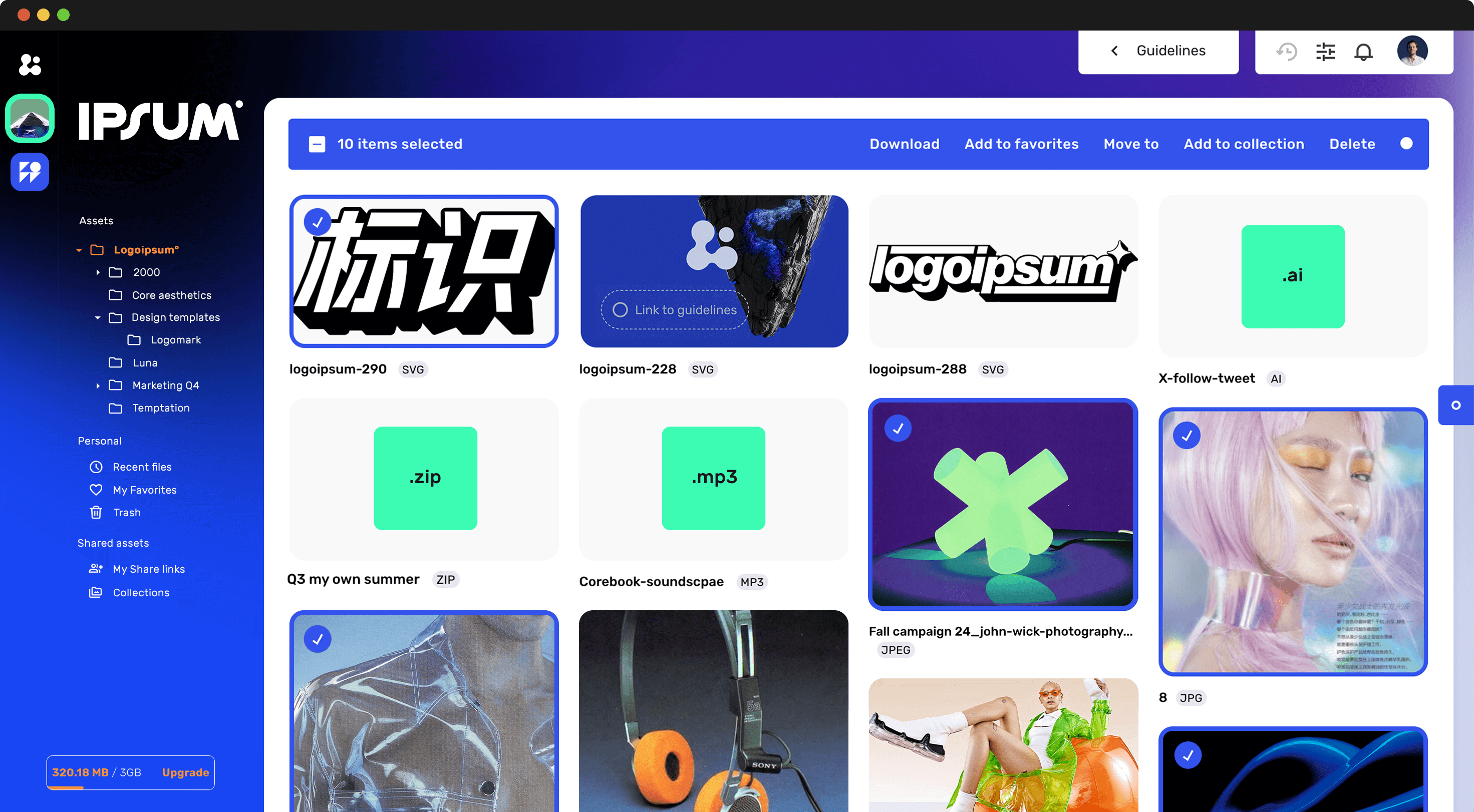
Digital Asset Management (DAM) and Brand Asset Management (BAM) solve related but different problems. DAM primarily helps organizations organize, manage and distribute digital assets at scale. BAM connects brand assets with the guidelines and context people need to use them correctly.
The right choice depends on whether your biggest challenge is managing digital content or helping people apply your brand consistently.
What is Digital Asset Management (DAM)?
A Digital Asset Management system is a centralized platform for organizing, managing, finding and distributing digital files.
Those assets can include:
- Images
- Videos
- Documents
- Creative files
- Marketing materials
For organizations managing large volumes of digital content, DAM provides infrastructure for keeping those assets organized and accessible.
The asset is at the center of the system.
What is Brand Asset Management (BAM)?
Brand Asset Management connects brand assets with the guidelines, rules and context needed to use them correctly.
Instead of only answering:
Where is the asset?
BAM should also help someone answer:
Which asset should I use, and how should I use it?
For example, finding a logo file is useful.
Finding that logo next to guidance explaining which version to use, minimum size, clear space, backgrounds and downloadable formats gives someone enough context to actually apply the brand.
That's the distinction.
DAM vs. BAM at a glance
The two categories can overlap considerably.
BAM isn't necessarily a replacement for DAM.
For some organizations it can be. For others, BAM and DAM can exist alongside each other because they're solving different problems.
When should you use a DAM?
DAM makes sense when the primary problem is asset volume and content operations.
For example, imagine a global retailer producing thousands of product photographs, campaign videos and marketing files.
The important questions might be:
Where is the latest product image?
Which assets are approved?
How can regional teams find them?
Who has permission to access them?
That's fundamentally an asset-management problem.
A DAM is built for it.
When should you use BAM?
BAM makes sense when the bigger problem is brand application.
Imagine that same regional team finds the correct campaign assets but now needs to adapt them for its market.
They might need to know:
Can this asset be modified?
Which typeface should accompany it?
How should the logo appear?
Which colors are approved?
Is there an example of the campaign in use?
Now finding the file isn't enough.
The team needs brand context.
That's the problem BAM is designed to solve.
Can DAM and BAM work together?
Yes.
An organization doesn't necessarily have to choose one or the other.
A DAM can remain the organization's system for managing large quantities of digital content while a BAM becomes the environment where people understand and apply the brand.
The distinction is useful because brand teams sometimes try to solve a brand-knowledge problem with an asset-storage solution.
If people can find the logo but still have to message a designer asking “Which one am I supposed to use?”, finding the asset wasn't the whole problem.
How does Corebook approach Brand Asset Management?
Corebook connects online brand guidelines with the assets required to apply them.
Instead of separating the rule from the resource, assets can be provided in context.
Someone reading logo guidance can access the appropriate logo assets.
Someone learning about typography can find the relevant resources alongside the guidelines.
Campaign or other brand assets can also live in the Corebook Asset Library.
The principle is simple:
Don't just help people find the asset. Help them understand what to do with it.
DAM or BAM: which do you need?
Start with the problem, not the acronym.
If your biggest challenge is storing, organizing, finding and distributing large volumes of digital content, start by looking at DAM.
If your biggest challenge is helping employees and partners understand and consistently apply your brand, look at BAM.
And if you have both problems?
You might need both.