



Why do sports brands need online brand guidelines?
Sports brands need online brand guidelines because their identities change faster and involve more stakeholders than static brand guidelines can easily support. Seasonal kits, sponsorships, campaigns, matchday content, merchandising and evolving digital assets all need to remain consistent across internal teams and external partners.
For sports organizations, that makes brand guidelines less of a document and more of a living brand system.
Teams, leagues and clubs need one place where people can find the latest guidelines and approved brand assets — and trust that what they're looking at is current.
Why are static brand guidelines difficult for sports brands?
Sports brands operate in an unusually fast-moving environment.
A new season can mean new kits, campaign assets, player communications, sponsorship applications and broadcast graphics. Smaller brand changes happen throughout the year.
With static files, every update creates another distribution problem.
Which PDF is current?
Did partners receive the latest version?
Where are the new assets?
Does the old document still exist in someone's Downloads folder?
Online brand guidelines replace multiple versions with one continuously updated source.
When a guideline or asset changes, the source changes rather than another version of the document being distributed.
How does LALIGA manage its brand guidelines?
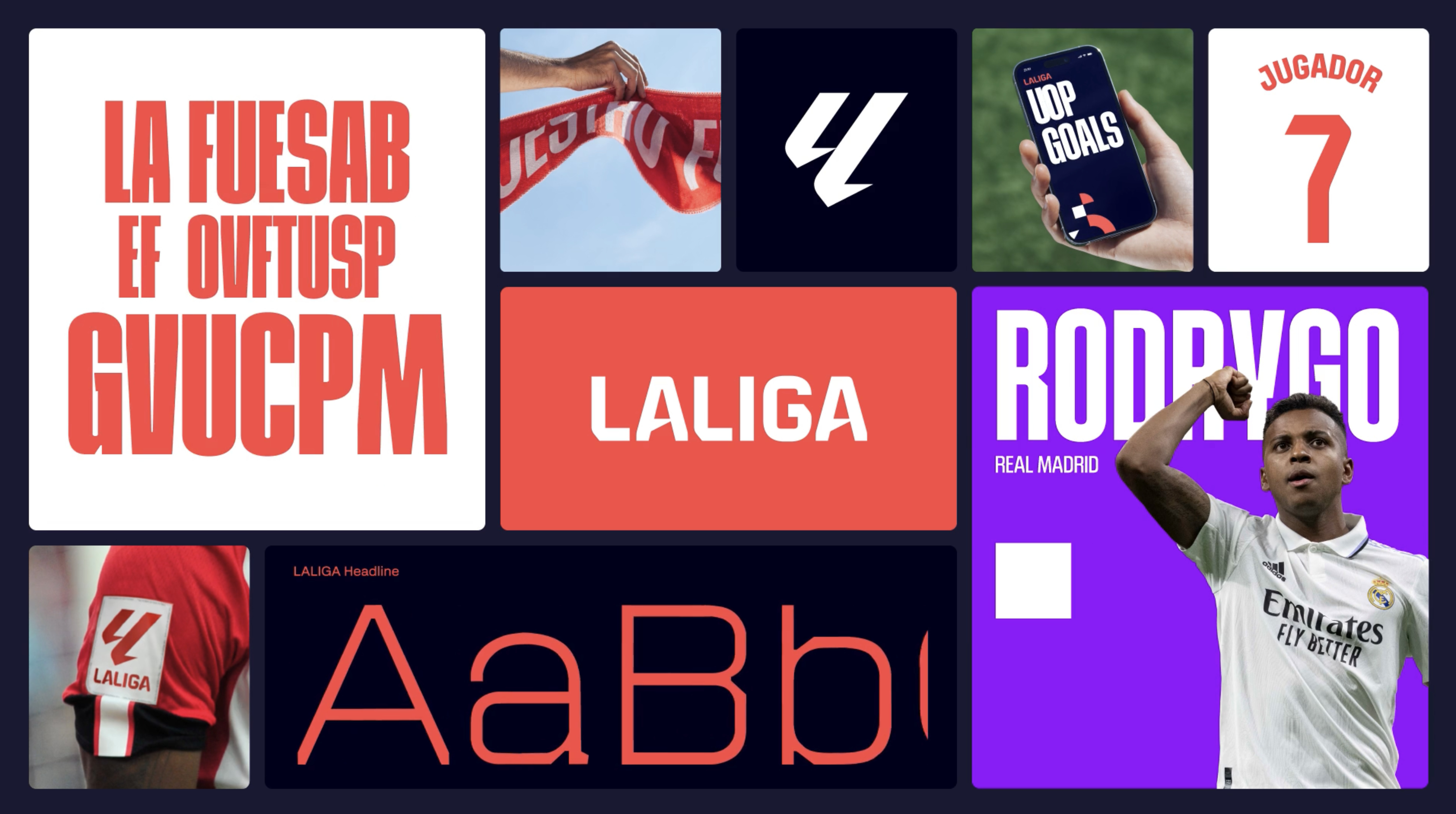
When LALIGA introduced a new identity after 30 years with its previous brand, it also moved its brand guidelines from static PDFs to Corebook.
LALIGA needed a multimedia-driven format that could bring its new guidelines and assets into one online environment.
That matters during a rebrand because publishing the identity is only the beginning.
The new system then has to be understood and applied consistently by everyone working with the brand.
For LALIGA, Corebook became the central place for that new brand system.
What does a single source of truth mean for a sports brand?
A single source of truth for brand guidelines means teams and partners use one authoritative, continuously updated source instead of relying on separately distributed copies of guidelines and assets.
For a sports organization, those users can include:
Brand and marketing teams → designers → merchandising teams → kit designers → agencies → sponsors → retail and external partners.
The value isn't simply having everything online.
It's knowing that everyone is working from the same version of the brand.
What are the benefits of online brand guidelines for sports organizations?
The biggest advantage is not simply that online guidelines are more modern than PDFs.
It's that they better match how sports brands actually operate.
Faster updates. Seasonal and day-to-day changes can be reflected without redistributing the guidelines.
One current version. Internal teams and external partners can reference the same source.
Guidelines and assets together. People can understand a rule and access the assets needed to apply it in context.
Multimedia support. Motion, audio and other digital brand behaviours can be demonstrated rather than described inside a static document.
Easier access for stakeholders. Brand knowledge doesn't have to live with the brand team alone.
For organizations whose identities are constantly being applied across physical and digital environments, that turns brand guidelines from a file people occasionally consult into infrastructure for using the brand.
How does Chelsea keep brand guidelines up to date?
That was one of the challenges Chelsea Football Club faced.
Creative assets existed across multiple environments, while guideline updates, seasonal kit designs and smaller day-to-day brand changes had to be communicated manually.
Chelsea moved toward a centralized online environment with Corebook where stakeholders could find new information in context rather than depend on another manually distributed update.
For a sports brand, this changes the workflow from:
Brand changes → new document → redistribute → hope everyone uses it
to:
Brand changes → update the source → everyone sees the current version.

Sports brands don't stand still. Their guidelines shouldn't either.
Sports brands have to balance things that naturally pull in different directions: tradition and change, global consistency and local execution, control and speed.
Their brand guidelines need to accommodate the same tension.
LALIGA and Chelsea approached that problem by moving their brand systems online with Corebook.
The principle behind both is simple:
When the brand changes quickly, the source of truth needs to change with it.